
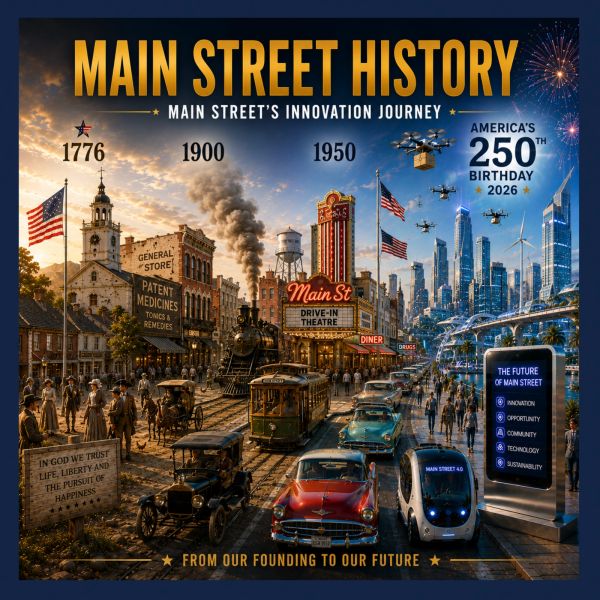
MAIN STREET HISTORY
Main Street History connects residents with the innovative stories that shaped their community. Our campaigns explore how local leaders helped build the Future of Main Street during the first three industrial revolutions. Residents discover how new technologies transformed daily life. These stories show how communities adapted to massive change. Main Street History preserves local stories to share them with future generations. Understanding the past helps communities appreciate the foundation on which they continue to build.
MAIN STREET HISTORY CAMPAIGNS
- Main Street's Innovation Journey
- Restaurant Innovation Journey
- Retail Innovation Journey
- Hotel Innovation Journey

Main Street Foundations Courses
Meet Your Main Street History Guide
Main Street Foundations Courses
Main Street Foundations explores the years from 1750 to 1830. Discover how water power, textile mills, improved tools, and early manufacturing laid the Foundations of Main Street.
The Rise of Main Street Courses
Meet Your Main Street History Guide
Main Street Foundations Courses
The Rise of Main Street examines the years from 1870 to 1914. See how railroads, electricity, irrigation, steel, and new roads expanded opportunity across local communities.
The Rise of Suburbia Courses
Meet Your Main Street History Guide
Meet Your Main Street History Guide
The Rise of Suburbia examines the Third Industrial Revolution from 1950 to 2025. Learn how highways, healthcare, communications, and technology reshaped community life.
Meet Your Main Street History Guide
Meet Your Main Street History Guide
Meet Your Main Street History Guide
Meet your history guide: Breezy. Discover the innovations, leaders, and ideas that shaped Main Street through the first three industrial revolutions. Learning history is fun!
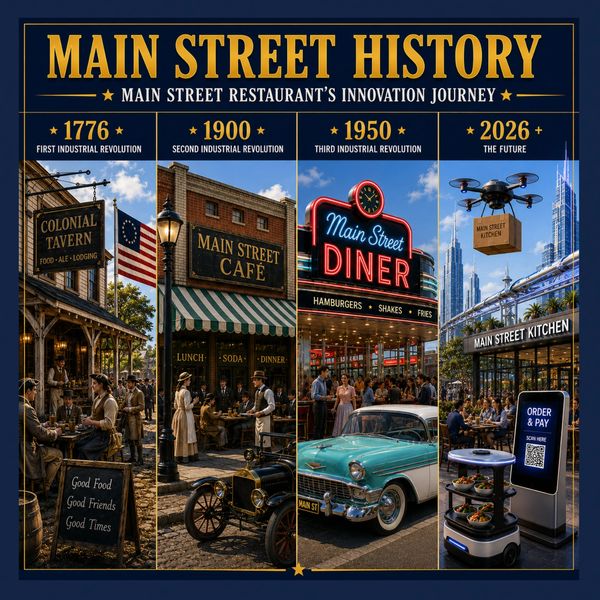
RESTAURANT'S JOURNEY
During the First Industrial Revolution, communities began producing goods faster and moving them farther than ever before. New roads, canals, and mills connected growing towns. Taverns, inns, and eating establishments served larger populations as Main Street continued to grow.
The Second Industrial Revolution transformed restaurants through railroads, refrigeration, electricity, and indoor plumbing. Ingredients could travel greater distances and remain fresh longer. Electric lighting changed dining rooms and kitchens. Restaurants entered a new era of growth.
The Third Industrial Revolution introduced computers, telecommunications, the internet, mobile phones, and digital payments. Restaurants adopted new tools to manage operations, market their business, and communicate with customers. Digital technology changed how people discover restaurants, place orders, and pay for meals.
Restaurant's Early Foundations
Rise of Main Street Restaurants
Rise of Main Street Restaurants
Grain mills, improved farming tools, and water power increased food production. Taverns and eating establishments served growing populations across developing communities.
Rise of Main Street Restaurants
Rise of Main Street Restaurants
Rise of Main Street Restaurants
Railroads, electricity, refrigeration, indoor plumbing, and mass production transformed Main Street. These innovations developed the Rise of Main Street restaurants.
Rise of Suburban Restaurants
Rise of Main Street Restaurants
Welcome to The Future of Dining
Computers, telecommunications, the internet, mobile phones, and digital payments reshaped Main Street. These innovations dramatically improved daily life.
Welcome to The Future of Dining
Rise of Main Street Restaurants
Welcome to The Future of Dining
VR, AI assistants, and robots are redefining the restaurant experience. These technologies create new opportunities to improve service, operations, and hospitality.
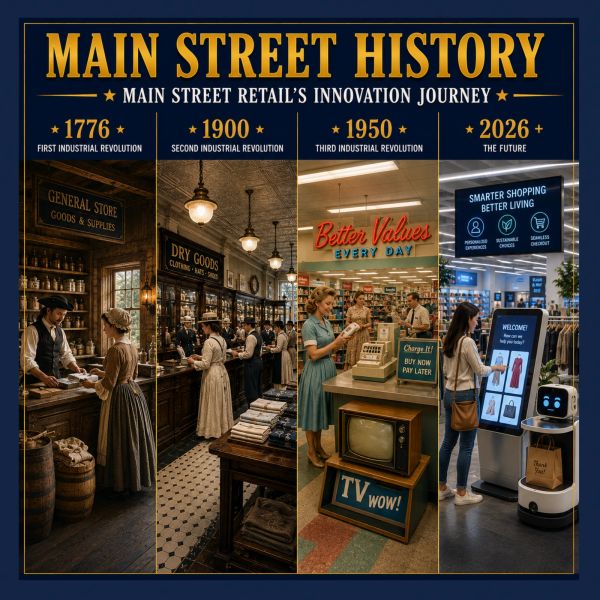
RETAIL'S INNOVAION JOURNEY
Roads, canals, mills, and early manufacturing brought more goods to local stores during the First Industrial Revolution. Merchants could stock a wider variety of products to serve growing communities. General stores became gathering places where residents purchased supplies and conducted business.
Railroads delivered products from across the country during the Second Industrial Revolution. Electricity brightened storefronts and extended shopping hours. Mass production filled shelves with new products and lowered costs. Retail stores expanded their selection and reached more customers than ever before.
Computers changed how retailers managed inventory during the Third Industrial Revolution. Barcode scanners sped up checkout and improved accuracy. The internet, mobile phones, and digital payments transformed how customers shop, compare products, and make purchases. Retailers gained new ways to communicate with customers and operate their businesses.
The First Industrial Revolution
The Future of Main Street Shopping
The Second Industrial Revolution
Water-powered mills increased production and expanded product availability. General stores offered more goods as manufacturing transformed commerce.
The Second Industrial Revolution
The Future of Main Street Shopping
The Second Industrial Revolution
Electric lighting transformed storefront displays and shopping hours. Railroads and mass production filled retail shelves with products to build the Rise of Main Streets across America.
The Third Industrial Revolution
The Future of Main Street Shopping
The Future of Main Street Shopping
Computers, barcode scanners, the internet, mobile phones, and digital payments shaped the Rise of Suburbia. Retailers transformed shopping and customer convenience.
The Future of Main Street Shopping
The Future of Main Street Shopping
The Future of Main Street Shopping
VR, AI assistants, and robots are reshaping Main Street retail. Retailers can create immersive experiences, strengthen customer relationships, and personalize service in new ways.
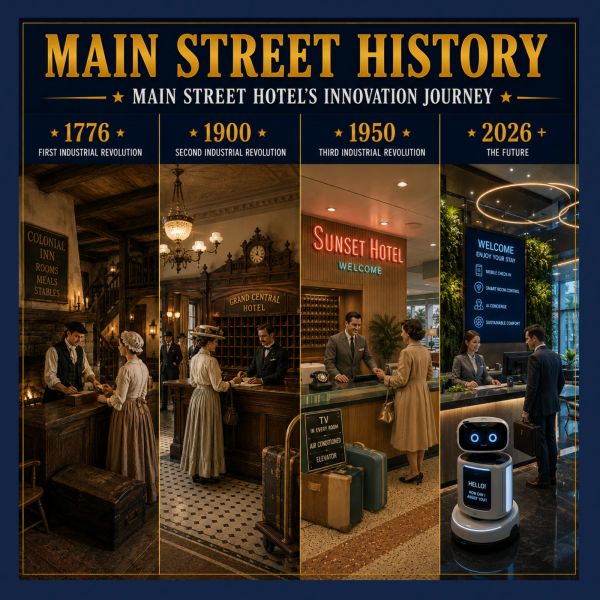
RETAIL'S INNOVAION JOURNEY
New roads and canals increased travel between communities during the First Industrial Revolution. Inns welcomed more merchants, workers, and travelers. As transportation improved, hospitality became an increasingly important part of the Future of Main Street.
Railroads brought visitors from greater distances during the Second Industrial Revolution. Electricity illuminated guest rooms and public spaces. Elevators, telephones, refrigeration, and indoor plumbing transformed the hotel experience. Hotels became larger, more comfortable, and more accessible to travelers.
Computers modernized reservations during the Third Industrial Revolution. The internet changed how travelers found and booked hotels. Mobile phones, digital payments, and telecommunications created new ways for guests and hotels to stay connected. Travelers could compare accommodations, make reservations, and manage their stay from almost anywhere.
The First Industrial Revolution
The Second Industrial Revolution
The Second Industrial Revolution
Improved transportation connected towns that once stood far apart. Hospitality businesses emerged along major routes to serve travelers moving across the country.
The Second Industrial Revolution
The Second Industrial Revolution
The Second Industrial Revolution
Elevators, telephones, electricity, and indoor plumbing transformed hotel accommodations. Railroads brought visitors from greater distances and expanded tourism opportunities.
The Third Industrial Revolution
The Second Industrial Revolution
The Future of Hotels and Resorts
Online reservations changed how travelers selected accommodations and planned trips. Computers, mobile phones, and digital payments modernized the guest experience.
The Future of Hotels and Resorts
The Second Industrial Revolution
The Future of Hotels and Resorts
VR, AI assistants, and robots are redefining hospitality. Hotels can create personalized experiences while expanding guest services and improving operational efficiency.